University of Oxford Homepage
Pheromones and Animal Behaviour

Slides for plenary talk to the 7th International Congress of Comparative Physiology and Biochemistry ICCPB in Salvador, Brazil 2007:

Wyatt - "Key roles for chemical communication in animal biology – insights from a comparative approach"

download (note animation on some slides means they are incomplete in the pdf - contact me if you wish tristram.wyatt@zoo.ox.ac.uk)


Pheromones and Animal Behaviour book cover picture
Contents
  1. Animals in a chemical world;
  2. Discovering pheromones;
  3. Sex pheromones: finding and choosing mates;
  4. Coming together and keeping apart: aggregation and host-marking pheromones;
  5. Scent marking and territorial behaviour;
  6. Pheromones and social organization;
  7. Pheromones and recruitment communication;
  8. Fight-or-flight: alarm pheromones;
  9. Perception and action of pheromones: from receptor molecules to brains and behaviour;
  10. Finding the source: pheromones and orientation behaviour;
  11. Breaking the code: illicit signallers and receivers of semiochemical signals;
  12. Using pheromones: applications;
  13. On the scent of human attraction: human pheromones?;

  14. Appendix An introduction to pheromones for non-chemists;
    - References.
   Communication by smell and taste
Tristram D. Wyatt (2003) Cambridge University Press

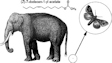
We are entering one of the most exciting periods in the study of chemical communication since the first pheromones were identified some 40 years ago. This rapid progress is reflected in this book, the first to cover the whole animal kingdom at this level for 25 years. The importance of chemical communication is illustrated with examples from a diverse range of animals including humans, marine copepods, Drosophila, Caenorhabditis elegans, moths, snakes, goldfish, elephants and mice.

The book is designed to be advanced and up-to-date, but at the same time accessible to readers whatever their scientific background. For students of ecology, evolution and behaviour, this book gives an introduction to the rapid progress in our understanding of olfaction at the molecular and neurological level. In addition, it offers chemists, molecular and neurobiologists an insight into the ecological, evolutionary and behavioural context of olfactory communication.

2003 | Paperback (Hardback) | 408 pages 118 line diagrams 28 half-tones 18 tables | ISBN: 0521485266       Cambridge University Press

A free short introduction to the terminology of enantiomers etc:

NEW Free Short introduction to pheromones for non-chemists


Also available for free download is the introductory chapter,
“Animals in a chemical world”, described by Peter Mombaerts in
Nature Neuroscience as ‘the best overview of pheromones that I
have ever come across’

Free download of Chapter 1,   

        full contents pages, index etc from CUP

You can also Google Booksearch the entire book


To order the book please select:

USA | Australia & New Zealand | UK and rest of world

For the UK you can compare mail order prices for the book


Corrections will be posted here.

Tristram Wyatt's other publications

What's new in the pheromone literature

Useful pheromone links


Reviews

"Pheromones are by far the most important signals used by organisms of all kinds. Wyatt's book is an excellent text and review: up-to-date, comprehensive, balanced, detailed, clearly written, and nicely illustrated."

Edward O. Wilson, Harvard University

"Wyatt demonstrates an impressive grasp of the literature and has written a most enjoyable and informative textbook (one that I read non-stop). ... Wyatt describes each strategy and concept concisely, and the stories are richly illustrated often with original images and figures from research articles. ... The introductory chapter, "Animals in a chemical world" is the best overview of pheromones that I have ever come across, and worth reading by itself if you have no time or interest to read the entire book. ... Undergraduates, graduates, postdocs and senior investigators working in diverse areas of biology will enjoy this book and find it useful. ... It is no exaggeration that, as the teaser of Wyatt's book claims,"[this book] is the first to cover the whole animal kingdom at this level for 25 years"."

Peter Mombaerts in Nature Neuroscience (2004) 7:201 [for full review click here]

"Valuable, engaging, and rewarding  … With authority and clarity, and drawing on findings from numerous lines of research based on a broad armamentarium of disciplines and methods, Wyatt focuses on one class of especially well studied semiochemicals (chemicals that mediate communication)—the pheromones.

His claim, on the opening page, that this is the first book on the subject to cover the whole animal kingdom at a level appropriate for both advanced undergraduates and researchers is no exaggeration.  …unparalleled overview of pheromones (Chapter 1)


[he] is to be commended for achieving an ideal compromise between scholarly depth and didactic clarity and effectiveness.   This well-illustrated, thoroughly referenced work is admirably accessible and lucid. It offers much both as a textbook and as an introduction to this remarkable field for new investigators.

Tristram Wyatt has given us a gem!"


John G Hildebrand in The Quarterly Review of Biology (2005) 80:144 [for full review click here]

"Wyatt's book is a remarkable summary of a growing and exciting field of discovery. His writing is clear, the book is fully referenced, and helpful figures and summary boxes are provided throughout. A particular strength is the concise presentation of the theoretical background to each major topic, enabling readers unfamiliar with the topic to appreciate fully how the pheromones under scrutiny have evolved. ... For those interested in olfaction, this book is excellent both as an introduction to the field and as a refresher of a vast, growing and exciting literature. ...This book neatly summarizes the substantial ground regained over the half-century since bombykol, the female silk moth pheromone, became the first pheromone to be characterized. Wyatt adopts a broad definition of pheromone, thus encompassing chemical cues that may not elicit specific responses or physiological changes in receivers but that none the less communicate information that influences their behaviour. This definition permits inclusion of, for example, odours involved in kin discrimination, such as those mediated by the major histocompatibility complex (MHC), and those produced as scent marks for territorial defence. The similarly catholic selection of examples from across a wide range of taxa ensures that this is a comprehensive and well-balanced account of the role of olfactory signals in behaviour across the animal kingdom."

S. Craig Roberts in Animal Behaviour (2003) 66:804-805 [for full review click here]

"excellently written account ... This book should be of great value as an introduction for anybody interested in animal communication and chemical or sensory ecology; from the undergraduate student in biology to the evolutionary biologist. Additionally, it will be very useful for any olfactory scientist or chemical ecologist seeking comparisons outside his or her own favourite model systems. As a passionate chemical ecologist myself, I may be inordinately biased to fall head-over-heels for the topics presented in the book, but less specialised friends and colleagues have agreed with me that it is well worth reading."


Mattias C. Larsson in Journal of Experimental Biology (2003) 206:4382-4383 [for full review click here]

“The challenge of surveying these different areas of Science has been brilliantly met by Dr Wyatt, who should be congratulated for this remarkable synthesis. The multidisciplinary coverage is indeed the most striking characteristic of this book, and throughout, the author displays a remarkable knowledge of these different topics.”

Jacques Pasteels and Désiré Daloze in Chemoecology (2004) 13:207 [for full review click here]

[The review also identifies some errors in the Appendix (which are corrected in later printings). The full corrected Appendix is a free download ]

“ the book will be particularly accessible to undergraduates and educators. More specialized practitioners of chemical ecology and behavior will also find something new and interesting in this broad text...  

written with great clarity throughout    

an excellent general book at a reasonable price.”

Neil J. Vickers in Journal of Chemical Ecology (2004) 30:881-882  [for full review click here]

 “this book is timely, extremely informative, and very readable. Biology and chemistry departments of all undergraduate and graduate colleges would do well to recommend this book to their students and to incorporate it into their curriculum. I learnt much from this book and will use it frequently both as a reference source and as a text.

Tristram Wyatt's book … comes at a very opportune moment and can make an important impact on young researchers looking for new and exciting problems.”

Renee M. Borges in Current Science (2005) 88:826-828 [for full review click here]

“From the opening sentence on elephants and moths to the closing chapter on human pheromones, Tristram Wyatt has produced a well-researched and interesting treatise on chemical communication.”  “the merging of the proximate and ultimate biological components with the chemical properties and analytical processes for identifying signals is one of the book’s strong suits.”  “ enjoyable reading and a highly successful endeavor that can serve as a course text, an update on the field, or a reference book.”  

 Bruce A. Schulte in American Entomologist  (2004) [for full review click here]

“[Pheromones is a ]valuable introduction to the world of pheromones, to students and professors alike. It can provide established researchers with the opportunity to gain significant insights into their respective systems by re-evaluating their knowledge in the light of behavioral ecology theory, moving from detailed and valuable descriptions of semiochemicals to an understanding of the underlying evolutionary processes. 


[about chapters 3-8] Unlike other texts, the author motivates the reader to consider the ultimate "Why" by incorporating the concepts of evolutionary behavioural ecology into all the discussions. The author does a great job in comparing and contrasting pheromone systems across numerous and diverse taxa ...    I would recommend the text to students and established researchers alike.”


Dan Miller in Bulletin of the Entomological Society of Canada (2004) 36:35-36 [for full review click here]

"Rather like Madonna, who famously sang of being a material girl living in a material world, Tristram Wyatt writes in this book of chemical beings living in a chemical world. Besides co-ordinating the workings of animal and plant bodies at every level, chemical signals - tastes and odours - are important in communication between animals, where they are known as pheromones. Their importance and ubiquity is often overlooked, but this fascinating book will do much to correct that.
Wyatt's book is an advance over previous monographs in that it is truly interdisciplinary, including as it does studies through the disciplines of chemistry, behaviour, neurobiology, endocrinology, ecology and evolution. Few scientists are expert in more than one or two of these subjects, and it is to bridge the gaps between these subjects that is one of the author's major aims. ... A highly recommended source of inspiration and information for all interested in behaviour and ecology."

Peter Chevins in Bulletin of the British Ecological Society (2003) 34(3):49 ISSN 0306 8307 [for full review click here]

"Tristram D. Wyatt's scholarly text intricately details ubiquitous chemical communication among animals from a diverse range of species. The Asian elephant shares a component of its female sex pheromone with 140 species of moth. Thus, evolutionary theory provides the backdrop for an interdisciplinary approach to chemical communication that includes information from neurobiological, hormonal, behavioral and ecological research. The book's thirteen chapters conclude with "On the scent of human attraction: human pheromones?" We now know that humans produce pheromones and that they also respond to pheromones with changes in behavior. ... It would be hard to overstate the importance of this book for its contribution to the understanding of animal behavior."

James V. Kohl in Human Nature Review (2004) 4:81-86 [for full review click here]

"Reading a book like this truly brings home how much all animals, from moths to muskrats to microsmic- having small olfactory bulbs relative to brain size-humans, rely on the sense of smell and on chemical communication. ...A well-illustrated chapter covers the physiological perception of pheromones, from the dual neural pathways making up the sense of smell (the olfactory bulbs and the vomeronasal organ) down to the olfactory receptors, pheromone and odorant-binding proteins, and clean-up enzymes that turn chemical signals off. Another short, but fascinating chapter details practical applications of pheromones.

...One of the biggest treats is a chapter on the role of pheromones in human behavior. The author covers such time-tested topics as menstrual synchrony and mother-infant olfactory communication, as well as the more controversial topics of the role of pheromones in human mate choice and the existence or non-existence of a vomeronasal organ in humans and Old World primates. ...The book is geared toward the advanced undergraduate or postgraduate researcher, and does a good job in reaching its target audience. ...An appropriate niche might be as additional reading for a behavioral neuroendocrinology class. ...as an accessible and intelligent general work on pheromones, this book is invaluable. It is also rare and welcome in its capacity for easy and readable explanation of both the proximate and the ultimate roles of pheromones in animal behavior."

Karen L. Bales in International Journal of Primatology (2003) 24:1367-1369 [for full review click here]

"an accessible textbook that offers advanced undergraduate and graduate students a data-based,integrative, and broadly comparative synthesis of this field. Crossing back and forth between invertebrate-vertebrate boundaries more freely than any other text in this area,Wyatt grounds behavioral, ecological, and biochemical observations of pheromonal communication in an evolutionary context.  ... particularly compelling is a synthetic conceptual figure presenting as a spectrum, rather than as a dichotomy, the range of pheromonal functions between immediate behavioral 'releasers' and physiological 'primers'.

...Wyatt's text allows students in an advanced class on pheromones to build a strong foundation of knowledge, and its readable and engaging style will launch many productive arguments along the way. Deeper discussions to interpret data are also possible,especially for instructors who supplement the text with primary literature."

John Lepri in Ethology (2003) 109:1021-1026  [for full review click here]

"Students of natural selection, sociobiology, and evolutionary psychology will enjoy this book. Much of the subject matter is appealing to physical anthropologists, including considerations of influences of resources on invertebrate mating strategies, discussion of the major histocompatibility complex, mate choice in mammals, and a critique of human pheromone research. The ability of the researcher to build on some ideas while acknowledging contentious aspects of them (e.g., human pheromones, especially copulins) will be greatly enhanced by this book.  …

This book focuses much more on the vehicle of communication than on the receptor organs. The elements that relate to pheromonal communication are selected from a vast literature and are well-integrated. Wyatt takes us much further than the mechanism, by providing a context of natural selection. This quality makes the book attractive to a broad group of scientists, including physical anthropologists. Wyatt has succeeded in his stated goal of the book: to bridge gaps among “biologists of many kinds and a rich diversity of chemists."

Timothy D. Smith in American Journal of Physical Anthropology (2004) 125:102-103 [for full review click here]

"an excellent, up-to-date review of the role that pheromones play in communication between individuals … an ideal text for advanced undergraduate courses as well as providing postgraduate students and academics with a fantastic starting point for research on the role of pheromones in animal behaviour.  … The book is accessible to readers from a range  of scientific backgrounds.  …  Pheromones and Animal Behaviour is clearly written and comprehensively researched."

Derek Turnbull in Austral Ecology (2005) 30:707-708 [for full review click here]

"This well ­structured, nicely illustrated and accessible book will provide a good starting point for researchers and students of any discipline."


Joanne Gurney in Mammal News (2005) 142:16 [for full review click here]

"Pheromones and animal behaviour is a well-balanced account including numerous examples of both vertebrate and inverte­brates species. It will appeal to both under­graduates and researchers or anybody interested in broadening their understand­ing of this fascinating field of research. I am sure it will become the standard text for many years to come."


Stephen Barlow in Biologist (2004) 51:119   [for full review click here]

"It is difficult to add any comment to the universal praise to this publication, that fulfils all the expectations for a comprehensive, scientifically rigorous and at same time enjoyable book on the world of pheromones. … The style, fluent and captivating, makes its reading a real pleasure.   …The interesting price of the paperback edition should encourage every scientist working in chemoreception to keep his own copy."

Paolo Pelosi in ECRO Newsletter (2005) 72:18 [for full review click here]
University of Oxford |