|
Bionanotechnology against
cancer Bionanotechnology
involves manipulating and modifying components of living organisms, to
generate tools on the 1-100 nanometre scale with new desirable
activities. Inspired by extraordinary
molecular features from the natural world, our goal is to
develop new biological and chemical approaches for disease diagnosis
and fundamental insight into how cells function.
Circulating tumour cells and engineering new antibody
technologies
Capturing the circulating tumour cells (CTCs) from blood samples is one
of the most promising approaches to enable early diagnosis of cancer.
CTC testing is already allowing rapid feedback on how a patient is
responding to therapy. Existing magnetic CTC isolation approaches only
capture the cells expressing high levels of tumour marker. We have shown
how improving antibody affinity and cholesterol loading makes it
possible to recover low-expressing cancer cells.
 
To improve further the isolation of CTCs, we are developing antibody
technologies with new protein architectures and modes of target binding.
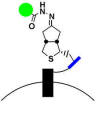
This includes a novel class of
antibodies/affibodies
that form covalent bonds to endogenous protein targets. Even high
affinity antibodies generally dissociate from their targets on the
time-scale of minutes. Antibodies that do not dissociate from their
targets should reduce the detection limit for soluble or cell-associated
tumour markers.
Fluorescent
Nanoparticles to analyse
receptors at the single molecule level
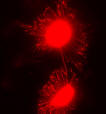
Most biological experiments observe the behaviour of hundreds to millions of molecules. Being able to study molecules one at a time can give dramatic new insights into the cell's function. We have developed new ways to target quantum dots (QDots)
and conjugated polymer dots (Pdots), ultra-bright nanoparticles,
to study cell surface receptors. In particular we have used QDs to understand the LDL receptor, which has a central
role in preventing heart disease and may also be important in the capture of lipid-soluble antigens to activate the anti-tumour immune response.
  
Nanohubs
and the limits of protein-small molecule interaction strength
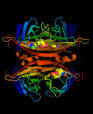
The interaction of streptavidin with biotin is one of the strongest non-covalent interactions in nature. Streptavidin is
a central tool for assembly and purification in biological research, as
well as showing success in radiotherapy clinical trials. We were able to make a version of streptavidin with 10-fold slower biotin dissociation. We have been investigating this
interaction to understand mechanical strength of protein-ligand interactions by single-molecule force spectroscopy with Vincent Moy in Miami and by crash-testing using bacterial DNA pumps with David Sherratt in this department. We are also
developing the use of streptavidin as an ultra-stable hub for
nanoassembly.
  
Designing protein superglue from bacteria
Peptide tags are central to protein analysis and isolation, but they are also “slippery”- it is hard to get a strong grip on them. We have harnessed and adapted an amazing feature of the bacterium Streptococcus pyogenes,
which can cause the "flesh-eating disease" necrotizing fasciitis. This
synthetic biology approach enabled us to achieve an irreversible covalent bond between genetically-encoded protein
(SpyCatcher) and peptide (SpyTag) partners; this bond is stable over time, at high temperatures, and against the forces in biological systems (blood flow, cell migration, molecular motors). We are extending the scope of this reaction, to
be able to investigate force generation inside the cell and to create
new protein architectures for CTC isolation.
 
Contact me for further information
about any of these projects, or to discuss the possibility of working on
other projects in the area of bionanotechnology / chemical biology. |