|
Teaching I am tutor in Biochemistry at Worcester College, Oxford University.
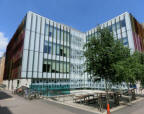
Worcester front quad, Playing with glucose conformations, Worcester is famous for its lake and gardens, From College biochemists' summer party, Worcester and St. Peter's Biochemists Xmas pizza party Biochemistry is the study of life at the molecular level. To learn more about the Biochemistry course at Oxford, please have a look here. For further information on the Oxford University college system, this site should be helpful. If you can, come to the open day for visiting the department and meeting tutors in July each year. Lectures Bionanotechnology: I am lecturing in the 4th year option in Bionanotechnology, on the subject of "Spying on cancer with ultra-bright nanoparticles". Slides for this are available on request, or for Oxford students here on WebLearn.
Enzymes Slides for my 2nd year lectures on Enzymes are available for Oxford students here, and see the links to some of the most important new work in this field: Jay Keasling lecture on enzyme and microbe engineering for producing anti-malarials and biofuels. David Baker computer game to allow you to get a feel for forces in protein folding, with the goal of designing new enzymes, and his lecture. Studying enzymes one molecule at a time, by Steven Block Benjamin Cravatt on fishing for new enzymes. Freeman Dyson imagining Our Biotech Future.
Fluorescent imaging I lecture for graduate students and postdocs on Fluorescent probes and on Single Molecule Imaging in the Oxford Advanced Light Microscopy Course, organised by Ilan Davis. E-mail me for slides from the lectures. I taught the advanced undergraduate seminar on fluorescence imaging in biology at MIT with Anthony Leung, under the supervision of Prof. Robert Horvitz. Here is the poster and the syllabus is below. The course is also on MIT OpenCourseWare.
Brightening
up Life: Harnessing the Power of
Fluorescence Imaging Instructors: Mark Howarth Anthony Leung Fall 2006.
Tuesdays, 11 am – 1 pm. Room 68-151. Summary: One summer in the 1960s a young Japanese
researcher, with the help of a few high school students, chopped up ten thousand
jellyfish. As a by-product of this
harvest, they isolated a green fluorescent protein (GFP).
Since then, GFP has triggered a revolution in our understanding of gene
expression and signaling in live cells. In
this seminar, we will examine how this small protein generates fluorescence,
i.e. absorbs light of one wavelength and emits light of a longer wavelength.
We will discuss how the color palette has been extended from green to
blue, red and many other colors, based on protein engineering of GFP and the
study of vividly colorful coral reefs. We
will then investigate how these fluorescent proteins can be used to track the
motion of DNA, RNA and protein in living cells, as well as to see waves of
signaling molecules propagate across a cell.
GFP is also a powerful tool for fluorescent imaging of whole organisms,
from worms to mice, and we will see how it has been used in tracking the spread
of cancer cells, controlling malaria and in understanding how neuronal
connections form. In this seminar,
we will explore this wonderful protein as well as other important methods and
reagents for fluorescent imaging. Course format: An essential tool in science, as in
life, is learning how to evaluate evidence to come to a conclusion. In
biology evidence can be complex and can appear to be contradictory. This course
is designed to familiarize you with the primary scientific literature, where
data are presented, so that you can decide for yourself whether other people’s
conclusions are well-founded, uncertain, or wrong. The class should be highly
interactive. You will be encouraged to express your opinions. Each week we will
discuss two primary research papers. We will first consider the objective of the
paper and the methods whereby conclusions were reached. We will look carefully
at the data and examine whether the authors' conclusions are compelling. Attendance: The course is based on discussions and
contributions in the class. Therefore attendance is essential. Grading and Assignments: Grading is pass/fail. Attending all
classes and completing all assignments satisfactorily will result in a pass. There will be two assignments in this
class: 1. Written assignment: You are required
to write a title and an abstract for a manuscript on fluorescent imaging that we
will provide. An abstract should include a basic introduction of the subject,
the important observations and the implication of the results. The total length
of the abstract should be less than 150 words. The manuscript will be
distributed on Class 2 (9/19), due by Class 5 (10/10) and discussed on Class 6
(10/17 or 24) 2. Oral assignment: you will give a
presentation to the class about a paper of your choice. These presentations will
be during Class 10 (11/21). You should have selected your paper for approval by
the instructors by Class 8 (11/07). See below (Class 10) for details about the
format. Class
schedule:
Class
1: General Introduction We will introduce ourselves and discuss
our backgrounds. The student will talk about their reasons for taking the course
and what they hope to get out of it. The instructors will give an overview of
the syllabus and the aims of the course. Then we will present a background to
the field of fluorescence imaging: what is fluorescence, why use fluorescence
detection, what sort of chemical structures are fluorescent, and how is
fluorescence observed? We will discuss the format of a primary research paper
and suggest how to critically analyze a paper. We will introduce the two papers
for the following week. Class
2: Discovery of Green Fluorescent Protein Green Fluorescent Protein (GFP)
triggered a revolution in our understanding of gene expression and signaling in
live cells because the protein was fluorescent in the absence of any other
cofactor. Such cofactors, which are needed for the fluorescence of proteins such
as phycoerythrin or phytochrome, are only synthesized in certain organisms and
are hard to deliver from outside the cell. We will examine the historical
background of the course by reading about the first purification and analysis of
GFP and then the first demonstration that GFP would produce fluorescence when
cloned into prokaryotic or eukaryotic hosts. This discovery opened the way for
the general use of GFP fusions as markers for protein localization. **The
manuscript for your written assignment will be handed out at the end of this
class. Morise
H, Shimomura O, Johnson FH, Winant J. Intermolecular energy transfer in the bioluminescent
system of Aequorea. Chalfie
M, Tu Y, Euskirchen G, Ward WW, Prasher DC. Green fluorescent protein as a marker for
gene expression. Class
3. Fluorescent protein engineering The Green Fluorescent Protein initially
recovered from jellyfish was far from an ideal tool. It was dim, it did not fold
at 37°C,
and its fluorescence was pH-sensitive and not photostable. Gradually, by a
combination of screening and directed evolution these faults were corrected.
These approaches, along with the isolation of fluorescent proteins from other
organisms, also allowed selection of fluorescent proteins spanning the spectrum
from blue to red. This allowed tracking of multiple proteins at once in the same
cell. We will discuss
the crystal structure of GFP, which illustrates the chemical reaction that makes
the protein fluorescent and provides a basis for rational engineering. We will
then talk about the Herculean effort to make a red fluorescent protein suitable
for tracking of cellular proteins. Yang
F, Moss LG, Phillips GN Jr. The molecular
structure of green fluorescent protein. Campbell
RE, Tour O, Palmer AE, Steinbach PA, Baird GS, Zacharias DA, Tsien RY.
A monomeric red fluorescent protein. Class
4:Photoconversion of fluorescent proteins variants to probe cellular dynamics Many
fluorescent proteins emit at a single color, but a few special ones can emit at
two colors or can be non-fluorescent in the natural state but turned on upon
photoactivation. Fluorescence emission depends on the chemical environment near
the chromophore, such as the 3D arrangement of amino acids and/or protonation
state of certain amino acids. In this class, we will examine two fluorescent
protein variants. One can change from green to red over time, while fluorescence
of the other can be induced by irradiation with violet light. We will discuss
how these fluorescent protein variants have been used to study gene expression
during embryonic development and protein trafficking between lysosomes. Terskikh
A, Fradkov A, Ermakova G, Zaraisky A, Tan P, Kajava AV, Zhao X, Lukyanov S, Matz
M, Kim S, Weissman I, Siebert P.
"Fluorescent timer": protein that changes color with time. Patterson
GH, Lippincott-Schwartz J. A photoactivatable GFP for selective photolabeling of proteins and
cells. Class
5: Labeling probes other than fluorescent proteins All methods of labeling and imaging
proteins have weaknesses. Fluorescent fusion proteins are not ideal for every
application. Their large size means that they can disrupt the function of the
protein to which they are fused. Also, fluorescent proteins do not provide
assistance for the targeting of small molecules such as dyes. A number of
ingenious methods have been developed to target small molecules to specific
peptides or proteins in living cells. Since there are thousands of proteins made
up of the same amino acids, this is a great chemical challenge. In this class we
will discuss one method of targeting that depends upon small-molecule
recognition of a specific peptide sequence and another method that depends on an
engineered enzyme-substrate interaction. From our discussion of these papers, we
will attempt to define the features of an ideal system for cellular labeling. **
You are required to hand in your written assignment at the start of this class. Griffin
BA, Adams SR, Tsien RY. Specific covalent labeling of recombinant protein molecules inside live
cells. Juillerat
A, Heinis C, Sielaff I, Barnikow J, Jaccard H, Kunz B, Terskikh A, Johnsson K.
Engineering substrate specificity of O6-alkylguanine-DNA alkyltransferase for
specific protein labeling in living cells. Class
6: Visit to a fluorescence microscopy facility We
will visit a facility for fluorescence microscopy in the MIT Center for Cancer
Research to see how some of the principles covered in this course are put into
practice. In particular, we will see live-cell imaging of cells expressing
fluorescent proteins of different colors and examples using photoactivatable GFP
fused to RNA-binding proteins (class 3 and 4). We will also see inorganic
fluorophores that provide an alternative to fluorescent proteins for protein
tracking (class 5). Practical issues of the microscope and software set-up for
live-cell imaging will be discussed. We will also continue our discussions based
on your written assignments. Class
7: Visualizing the Central Dogma of Molecular Biology In
1958, Francis Crick coined the term the "Central Dogma" to
characterize the all-important cellular processes whereby DNA is
"transcribed" into RNA, and RNA is "translated" into
protein. Since then, researchers have typically examined individual aspects of
the Central Dogma in isolation, by developing separate systems for studying
transcription or translation. In
this class, we will first discuss a system in which DNA, RNA and protein are
tracked together in living cells by the ingenious use of fluorescent proteins.
This technique reveals how the genome organization is changed upon
transcriptional activation in mammalian cells. Then we will discuss an
alternative method, using fluorescently labeled RNA "beacons" to track
the migration of a specific mRNA required for embryonic development. Janicki
SM, Tsukamoto T, Salghetti SE, Tansey WP, Sachidanandam R, Prasanth KV, Ried T,
Shav-Tal Y, Bertrand E, Singer RH, Spector DL.
From silencing to gene expression: real-time analysis in single cells. Bratu
DP, Cha BJ, Mhlanga MM, Kramer FR, Tyagi S. Class
8: Fluorescent sensors of cell signaling: FRET Cell signaling occurs on the timescale
of milliseconds and with spatial compartmentalization over micrometers. This is
clearly illustrated by neurons, which can have rapid firing of one synapse while
a thousand other synapses on the same neuron are silent. Conventional approaches
to analyze signaling cascades involved fixing or freezing thousands of cells at
a defined time-point and grinding up the cells for subsequent assays on the
signaling molecules involved. With the use of fluorescent reporters, cell
signaling events could be observed in living cells and living organisms in real
time. The first fluorescent reporters of cell signaling were based on dyes that
had to be microinjected into cells or diffuse into cells from the cell medium.
With the advent of fluorescent proteins, a new generation of fluorescent
reporters became possible that could be genetically targeted to specific
cellular compartments or cell-types. These reporters depended upon the
phenomenon of fluorescence resonance energy transfer (FRET). We will explain the
principle of FRET and, based on the first paper, we will discuss how the first
genetically-encoded FRET reporter was constructed. We will then see how later
generation FRET reporters compare, in the context of imaging calcium changes as
fruitflies contract their muscles. **
You are required to have chosen your paper for the Oral Assignment and submitted
it for approval to the instructors by the beginning of the class. Miyawaki
A, Llopis J, Heim R, McCaffery JM, Adams JA, Ikura M, Tsien RY. Reiff DF, Ihring A, Guerrero G, Isacoff EY, Joesch M, Nakai J, Borst A. In vivo performance of genetically encoded indicators of neural activity in
flies. Class
9: Quantitative and ultra-sensitive fluorescent imaging Cell biologists have sometimes been
accused of producing only pretty pictures and drawing only qualitative
conclusions. However, the direct fusion of GFP to gene of interest in a 1:1
ratio, providing sufficient signal without the need of amplification, forms a
good basis for quantitative analysis. We will discuss how fluorescent protein
fusion was used to quantify the movement of proteins throughout the nucleus and
between nuclear compartments. Biologists
conventionally study hundreds to millions of molecules at a time. Improvements
in lasers, cameras, microscope design and fluorescent proteins mean that
biologists are starting to explore the behavior of molecules one at a time. Such
ultra-sensitive detection unveils new features of cellular behavior, including
stochastic phenomena, and allows resolution well below that limited by the
diffraction of light. We will illustrate ultra-sensitive detection with a paper
that looks at the diffusion of single neurotransmitter receptors over the
surface of a neuron with 45 nm accuracy. Phair
RD, Misteli T.
High mobility of proteins in the mammalian cell
nucleus. Tardin
C, Cognet L, Bats C, Lounis B, Choquet D.
Direct imaging of lateral movements of AMPA
receptors inside synapses. Class
10: Student presentations Each member of the course will present
one paper on fluorescent imaging. The paper should be selected to demonstrate
the strength of fluorescent imaging over other methods to address a biological
question, such as gene expression or cell signaling. The length of the
presentation will be around 10-20 minutes, followed by 3-5 minutes of questions
and discussions. It is suggested that PowerPoint be used as a visual aid. The
goal is to develop your ability to communicate science to your peers. The first
aim of the presentation is to introduce the background of the paper and then
explain clearly what experiments were done. You should propose one future
experiment in your last slide. Class
11: Power of fluorescent imaging for high-throughput analysis High-throughput techniques, such as mass
spectrometry and microarrays, have become standard tools to study the expression
of multiple gene/gene products in one experiment. However, despite their
usefulness, these methods only give information that is an average from a number
of cells and cannot provide significant temporal or spatial resolution. The
possibility to distinguish multiple colors from the same volume of space makes
fluorescence-based imaging an ideal tool to study many cellular processes in
parallel. In this class, we will examine two fluorescence-based imaging assays
that can extract multiple parameters, including gene expression profiles,
subcellular organization and cell cycle states, from each single cell in a
high-throughput fashion. Wheeler
DB, Bailey SN, Guertin DA, Carpenter AE, Higgins CO, Sabatini DM. Nat
Methods. 2004 Nov;1(2):127-32. Epub 2004 Oct 21.
Neumann
B, Held M, Liebel U, Erfle H, Rogers P, Pepperkok R, Ellenberg J. Nat
Methods. 2006 May;3(5):385-90. Class
12: Fluorescent imaging in living organisms Fluorescent proteins have often been
used in isolated cells, to study dynamics of proteins and mRNA or to understand
cell signaling. However, fluorescent proteins are also powerful tools in whole
organisms to track cells and cell signaling. We will discuss the extra
difficulty of fluorescent imaging in large organisms and how methods such as
two-photon microscopy have helped to overcome some of these difficulties. We
will compare the use of fluorescence imaging to other imaging methods, such as
Magnetic Resonance Imaging (MRI) and Positron Emission Tomography (PET), which
are used in hospitals. The first paper looks at the trafficking of T cells in a
living mouse, to try to understand how the immune response is initiated. The
second paper describes how GFP has been used to understand the fate of malaria
parasites injected inside the body by a mosquito bite. Miller MJ, Wei SH, Parker I, Cahalan MD. Two-photon imaging of lymphocyte motility and antigen response in intact lymph node. Science. 2002
Jun 7;296(5574):1869-73. Amino R,
Thiberge S, Martin B, Celli S, Shorte S, Frischknecht F, Menard R. Nat Med. 2006 Feb;12(2):220-4. |
|
Copyright © 2013 Mark Howarth. All rights reserved. |