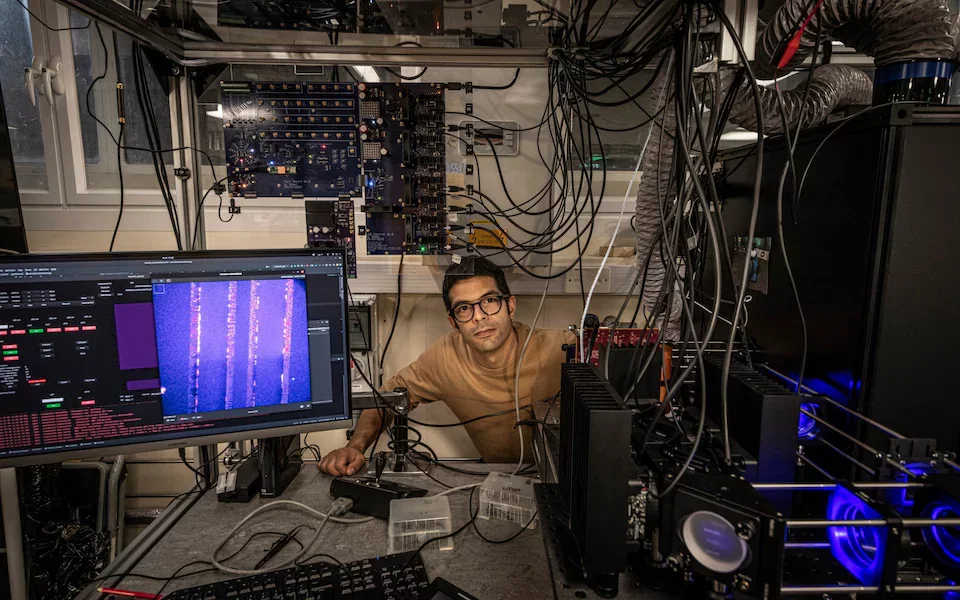
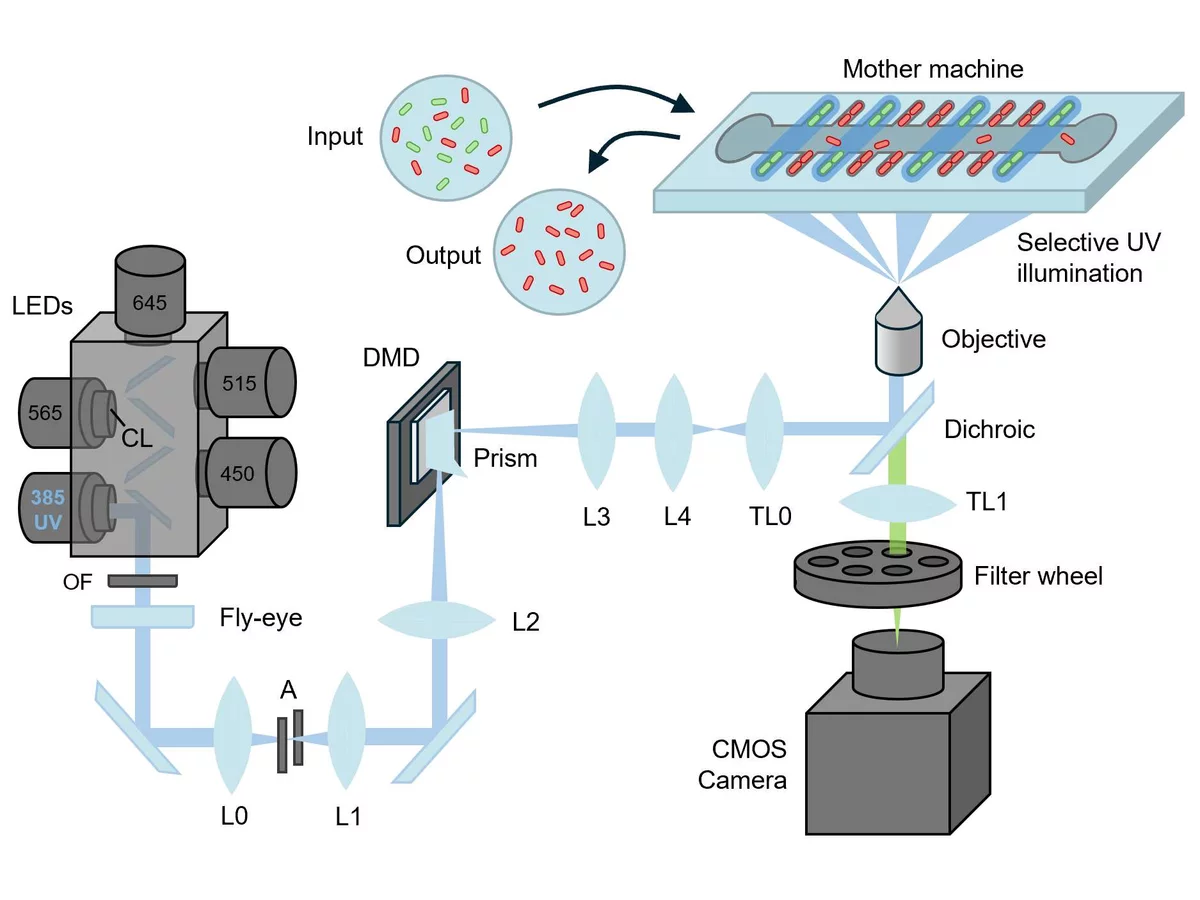
The laboratory develops automated platforms for observing, perturbing and controlling large numbers of individual cells using microscopy and microfluidics. This work combines control engineering, computer vision and real-time decision-making to automate experiments involving hundreds of thousands or millions of cells.
High-throughput experimentation
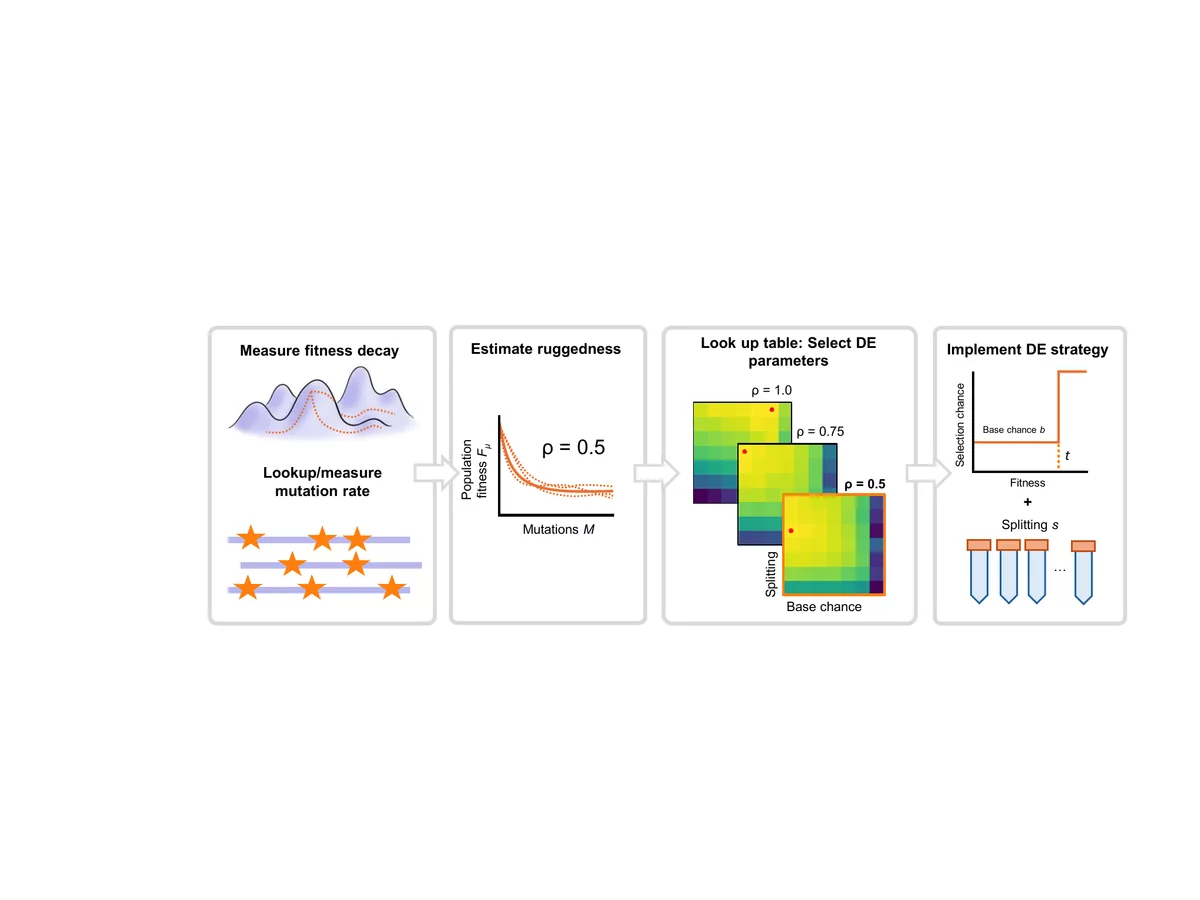
Current projects include high-throughput characterisation of evolutionary landscapes, cybergenetic feedback control at the single-cell level, and platforms for manufacturing and screening messenger RNA–lipid nanoparticle therapeutics. The broader aim is to create experimental systems that analyse data and adapt their actions autonomously in real time.
We co-develop DeLTA (Deep Learning for Time-lapse Analysis), an open-source deep-learning pipeline for automated segmentation and tracking of individual cells in time-lapse microscopy. Our work adds real-time features so that DeLTA can operate within a feedback-control loop, while also optimising the pipeline for high-throughput processing and screening applications.
Collaborative engineering biology
We also work with experimental biologists on genetic sensing, communication and feedback systems. Collaborations include genetic circuits for plant-to-bacterium and bacterium-to-bacterium communication, with applications in biological nitrogen fixation, and genetic sensing and feedback systems in mammalian cells.