|
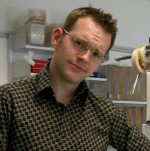
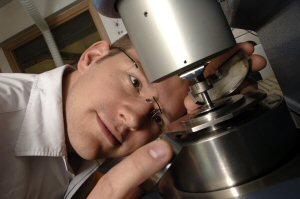
Chris Holland Since January 2013 has started a new position as an EPSRC Early Career Fellow continuing his silk research in the Materials Science and Engineering Department at the University of Sheffield. His research group pages may be found here. Chris Holland undertook his BA in Biological Sciences and MSc in Integrative Biosciences at Jesus College, Oxford University where a masters project at the Silk Group has given him the opportunity to study silk as his D. Phil in the ABRG at the Department of Zoology. Afterwards he was awarded a Fellowship by Examination at Magdalen College Whilst originally trained in classical biology he is now using these skills to study silk using techniques usually found in a wide range of fields, from material science to polymer chemistry and molecular modelling. His work focuses mainly on the rheology (the study of flow and deformation of matter) of silks. Silk is stored as a liquid like gel inside the spinning glands of these animals. However by just being pulled through the spinning duct they turn into solid fibres. By using a rheometer, Chris is able to investigate the silk dope as it is subjected to flow and record the shearing conditions required to make silk undergo this liquid solid transition.
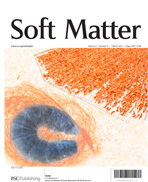
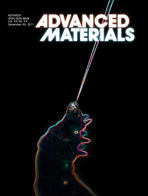
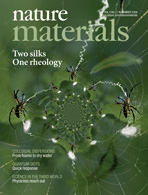
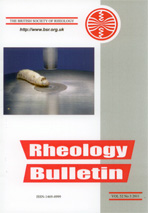
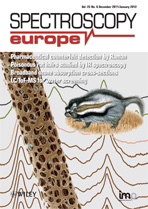
Most recently working with Oleksandr Mykhaylyk and Tony Ryan at the University of Sheffield, he has demonstrated that natural silks are a thousand times more efficient than common plastics when it comes to forming fibres (cover of Advanced Materials). Additionally recent work with Dan Blair and Jeff Urbach at Georgetown University has been able to visualise this process at the microscopic level (cover of Soft Matter). Together these results have significant implications for silk processing as well as the design and processing of novel bio-inspired synthetic polymers. This work builds upon his first paper (cover of nature materials November 2006, see publications) showed that despite being separated by millions of years of evolution and independently evolving the ability to spin a fibre, Spider and Silkworm silk flow in a very similar way to each other. In addition they also behave like industrial molten polymers (polystyrene, nylon), this opens up the field to be used as a new way of investigating silks using polymer modelling and knowledge. A follow-up paper published in Polymer proposes in order to spin a 'natural silk in a natural way' we must go 'back to basics' to create an artificial silk dope with a rheology that matches its natural progenitors, thus turning 'evolutionary constraints into design criteria'. Now he is combining multiple instruments with rheology, from microscopes and spectrometers to synchrotrons (ISIS and ESRF) in order to understand the formation of silk fibres as they flow down the spinning duct (see publications). Additionally through collaboration with medics at the Nuffield Orthopaedic Centre he developed Dynamic Shear Analaysis as a means to test small human tissue samples allowing the study the effects of aging and disease on the mechanical properties of tendons and cartilage. He sits on the comittee of RAPS: Recent Appointees in Polymer Science and is an active member of the Nanotechnology Knowledge Transfer Network, BIOKON the British Society of Rheology, Society of Experimental Biologists, British Aranological Societry the Institute of Physics and the Oxford Polymer Network. He is also a reviewer for several journals.
|
|